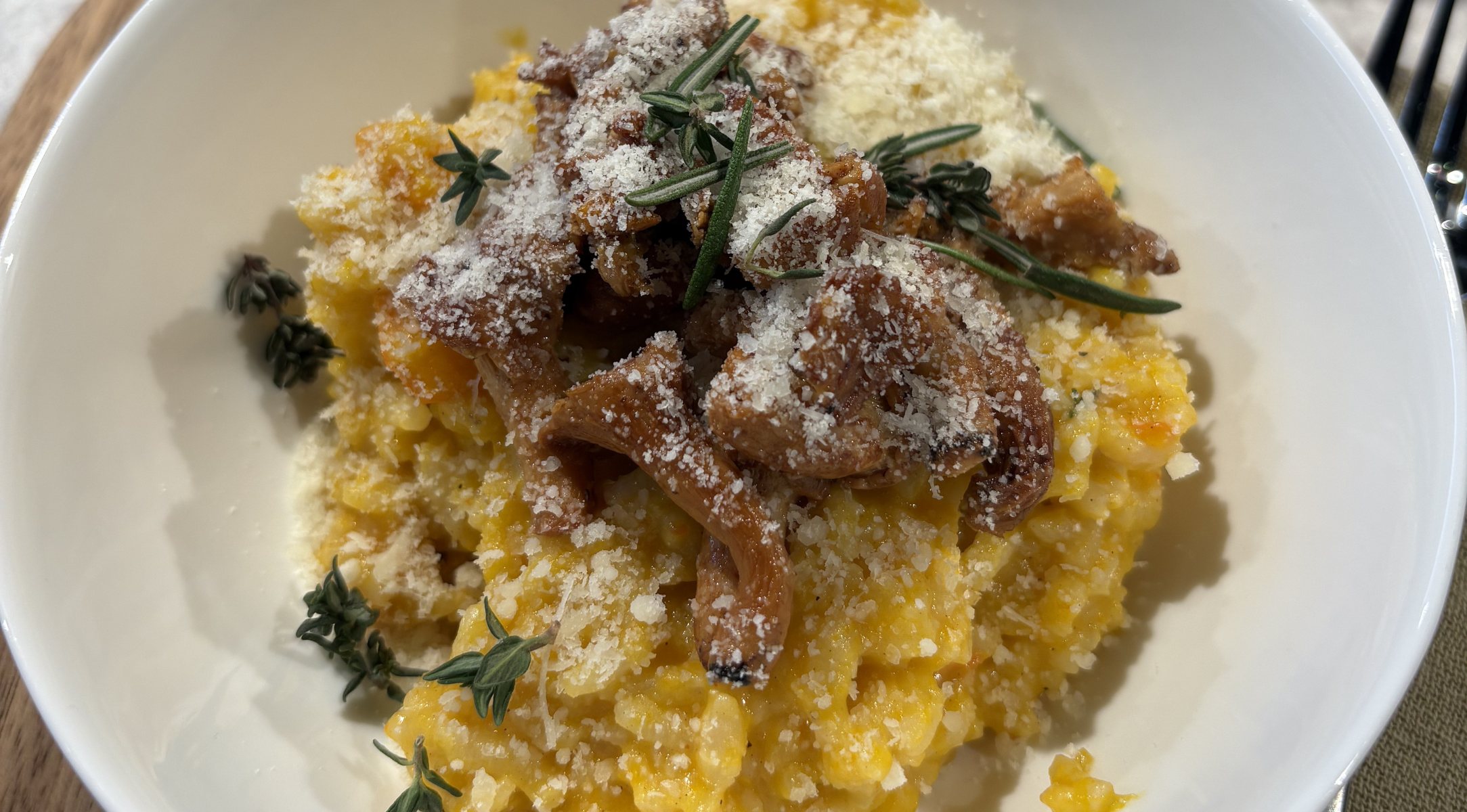
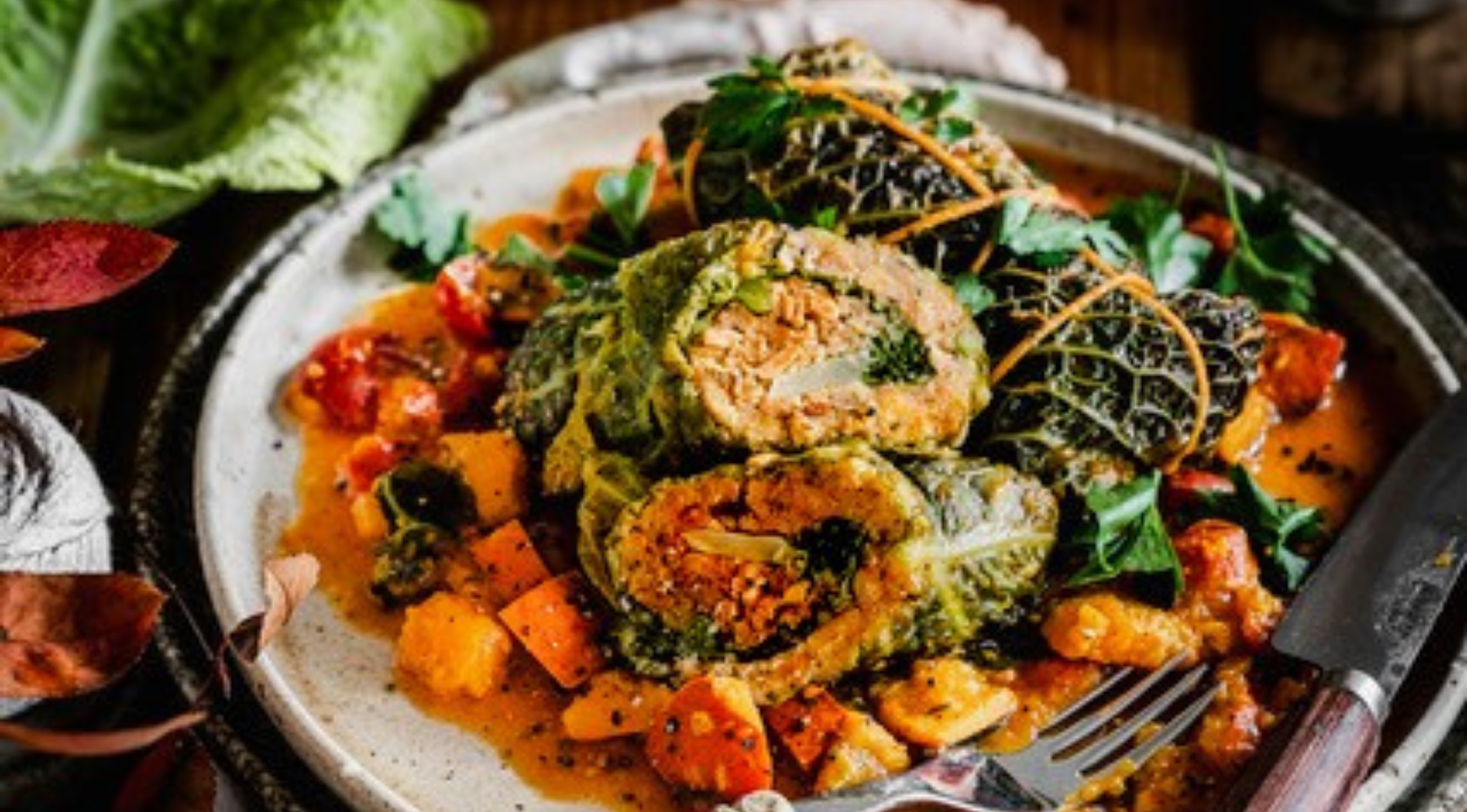
Kürbis zubereiten: Die besten Sorten und Kochtipps für Hobbyköche

Pumpkin Preparation: The Best Varieties and Cooking Tips for Home Cooks

The aroma of roasted pumpkin. The quiet bubbling of a creamy soup. And that moment when a few simple ingredients turn into something you can truly be proud of.
Few vegetables say autumn as much as pumpkin. And the best part: every variety brings its own character. Sometimes nutty and bold, sometimes mild and creamy. Perfect for soups, oven bakes, curries, or risotto.

But which pumpkin goes with which dish? And how do you get the best out of Hokkaido, butternut & co.? We show you the most popular varieties and give you tips for pumpkin dishes that are guaranteed to make you want seconds.

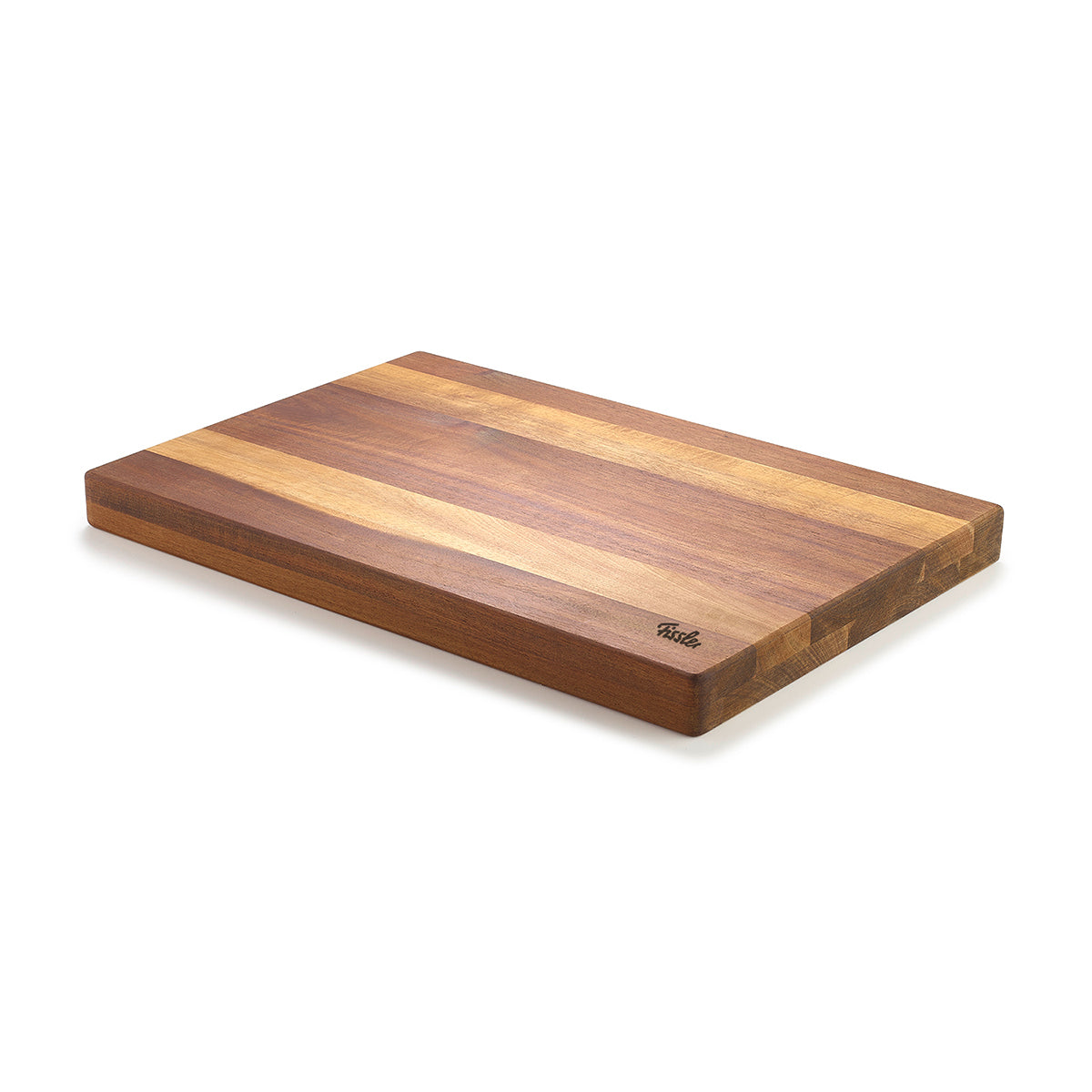
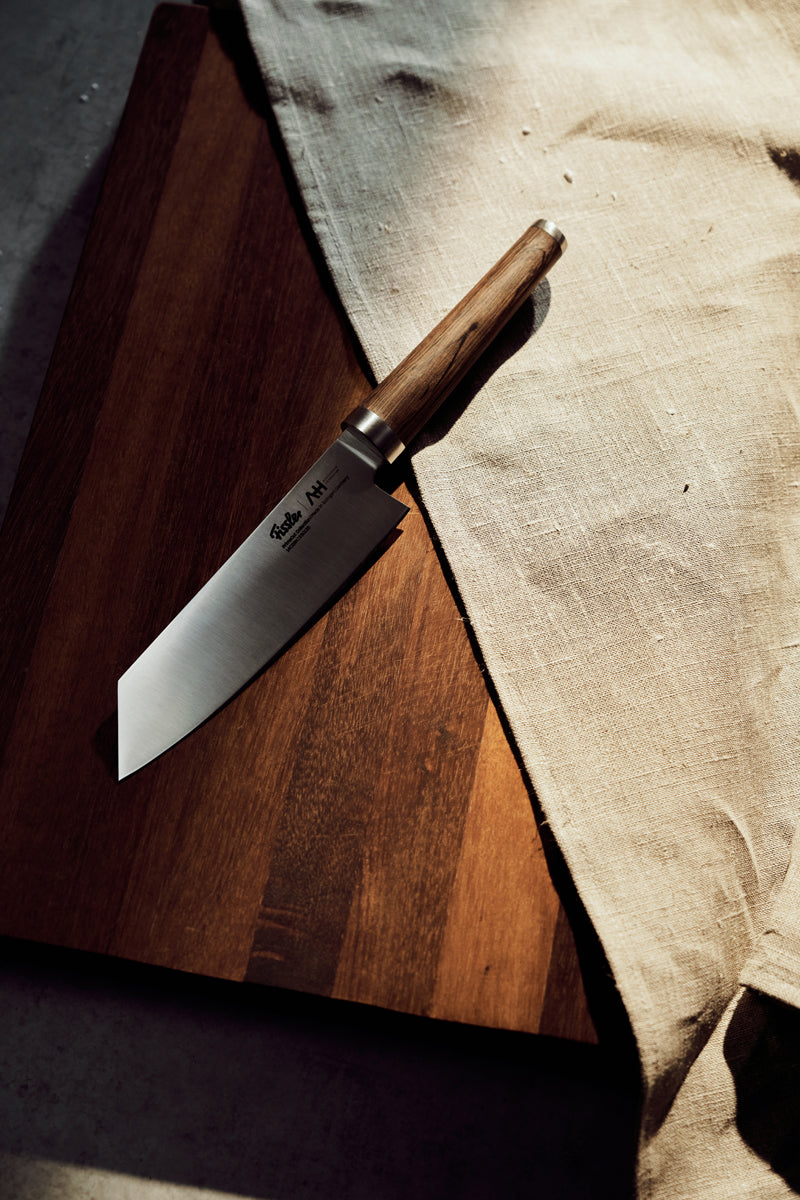
A butternut squash, onions, garlic, and a premium knife are arranged on a wooden Fissler cutting board atop a table. A neatly folded cloth rests nearby, all set within an inviting kitchen—reflecting the precision, durability, and timeless design of Fissler quality kitchenware.

The Most Popular Pumpkin Varieties at a Glance

Hokkaido

If one pumpkin lands in your kitchen especially often in autumn, it’s Hokkaido. No wonder: you can use it with the skin on, saving yourself an extra step.

Its nutty flavor, slightly reminiscent of chestnuts, works beautifully in many recipes. Whether creamy soup, roasted vegetables, or risotto – Hokkaido feels at home almost anywhere.

Ideal for:

  • Soup
  • Oven dishes
  • Risotto
  • Puree
  • Savory pies
A halved butternut squash revealing its seeds rests on a wooden board, accompanied by diced squash prepared with precision. Nearby, a bowl of freshly scooped seeds and sprigs of aromatic thyme highlight attention to detail, while in the background, golden roasted cubes glisten on a tray—showcasing ingredients ready for timeless creations with German-engineered cookware from Fissler.

Butternut

Butternut wins you over with its delicate sweetness and especially creamy texture. Because the seeds are only in the lower part, it’s also easy to prepare.

If you love pumpkin dishes with an especially velvety texture, Butternut is often the first choice.

Ideal for:

  • Cream soups
  • Oven dishes
  • Salads
  • stuffed pumpkin
  • pumpkin fries
A halved pumpkin rests on a wooden cutting board, surrounded by bowls of vibrant pumpkin soup, chutney, rice, and fresh herbs—all presented atop a beige table. Nearby, freshly grated nutmeg and a grater hint at authentic flavors. Fissler’s precision-engineered stainless steel cookware and kitchen accessories bring innovation and timeless German quality to the heart of this autumnal scene. Fresh thyme sprigs and a jar of chutney complete the background.

Nutmeg

Do you like bold flavors? Then you should try muscat pumpkin.
Its layered flavor adds special depth to curries, chutneys, and soups. At the same time, it is also perfect for sweet recipes.

Its name already gives it away: muscat pumpkin delights with a spicy aroma and a delicate nutmeg note.

Ideal for:

  • Curries
  • Chutneys
  • Soups
  • Puree
  • Salads
  • or baking
On a Fissler plate, a whole spaghetti squash and a halved one with delicate, forked strands are arranged. In the background, a Fissler bowl presents spaghetti squash topped with marinara sauce, fresh basil, and finely grated cheese—showcasing precision-cut ingredients that complement the quality of Fissler cookware.

Spaghetti squash

This squash only reveals its surprise at second glance. Once cooked, its flesh separates into fine strands that resemble spaghetti.

That makes it the ideal base for creative vegetable dishes. Its flavor is pleasantly mild, with a slight hint of zucchini.

Ideal for:

  • Pasta dishes
  • Bakes
  • with a classic tomato sauce
A whole and a halved delicata squash rest on a dark plate, showcasing vibrant seeds within—presented alongside a bowl of cooked squash, premium oil, freshly ground pepper, and aromatic herbs. A scene that highlights the art of cooking with Fissler’s expertly crafted cookware, reflecting German precision and timeless design for every kitchen creation.

Delicata squash

Looking for something new for your autumn kitchen? Then try Delicata squash. Its thin skin can be eaten too, and its flavor is mild, slightly sweet, and reminiscent of chestnuts and sweet potatoes.

An exciting alternative to Hokkaido and butternut—especially if you love discovering new flavors.

Ideal for:

  • oven dishes
  • stuffed squash
  • salads
  • grilled dishes
  • squash fries

Which type of pumpkin goes with which dish?

Hokkaido

Nutty, slightly chestnut-like

Soups, oven dishes, risotto, purée, pumpkin pie

Butternut

Mild, slightly sweet, buttery

Soups, oven-roasted vegetables, salads, pumpkin fries, cakes

Nutmeg

Spicy, aromatic, lightly sweet and tangy

Curries, Soups, Chutneys, Puree, Salads

Spaghetti squash

Mild, lightly nutty, reminiscent of zucchini

Pasta alternative, casseroles, oven dishes

Butternut squash

Sweet and especially aromatic

Soups, Puree, Pesto, Desserts

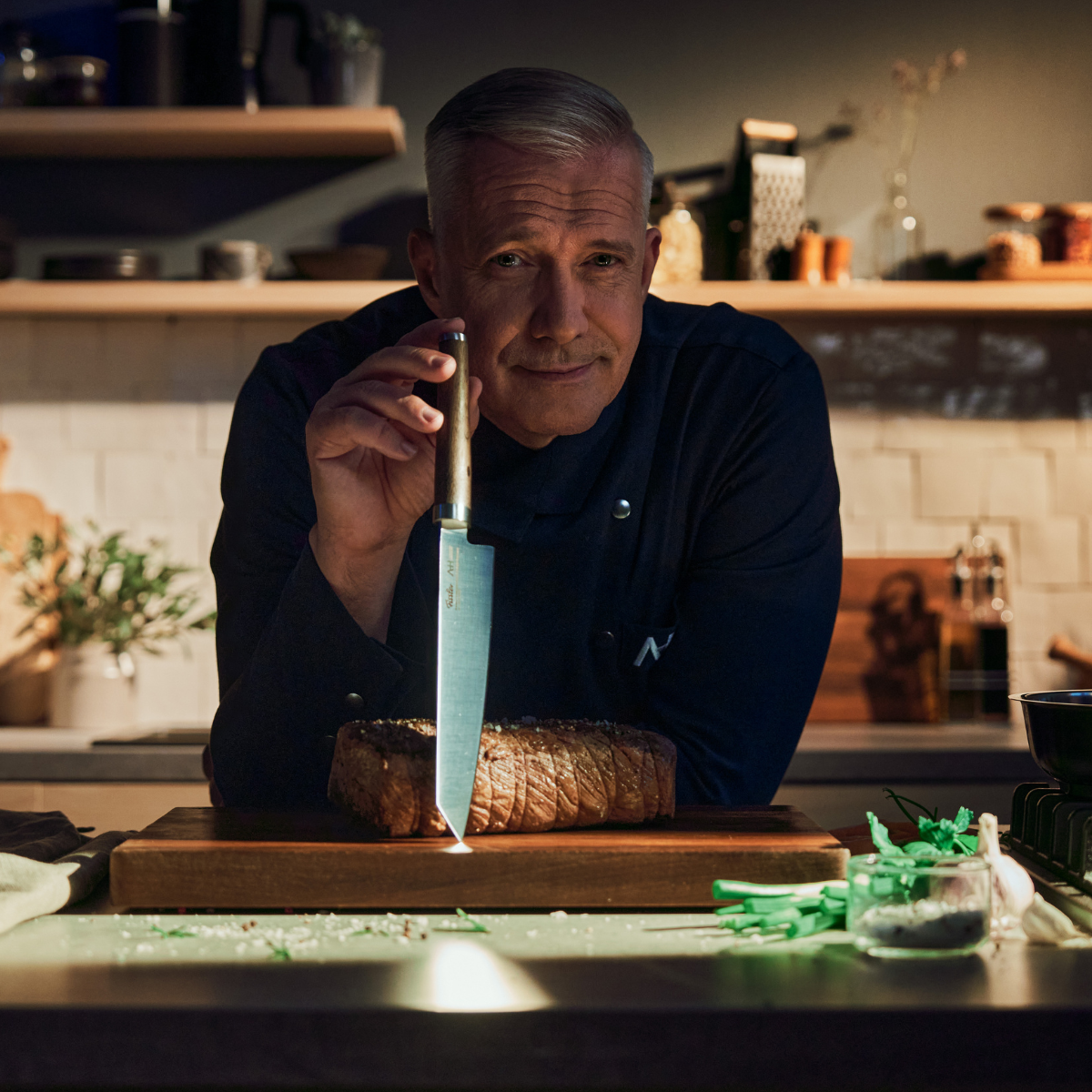
A person prepares a butternut squash with precise knife work on a wooden surface, surrounded by fresh produce and hints of greenery in the foreground. The scene reflects Fissler’s commitment to timeless design and innovation in the kitchen, where durable cookware and expertly engineered kitchen tools ensure exceptional culinary results.

Prepare pumpkin properly

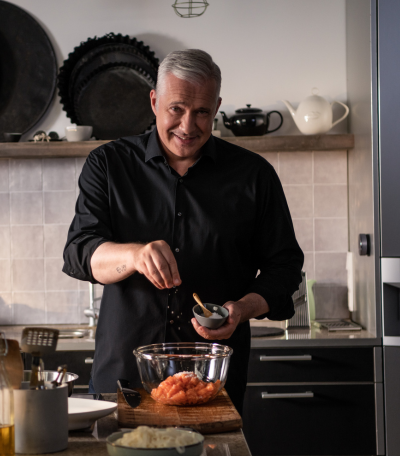
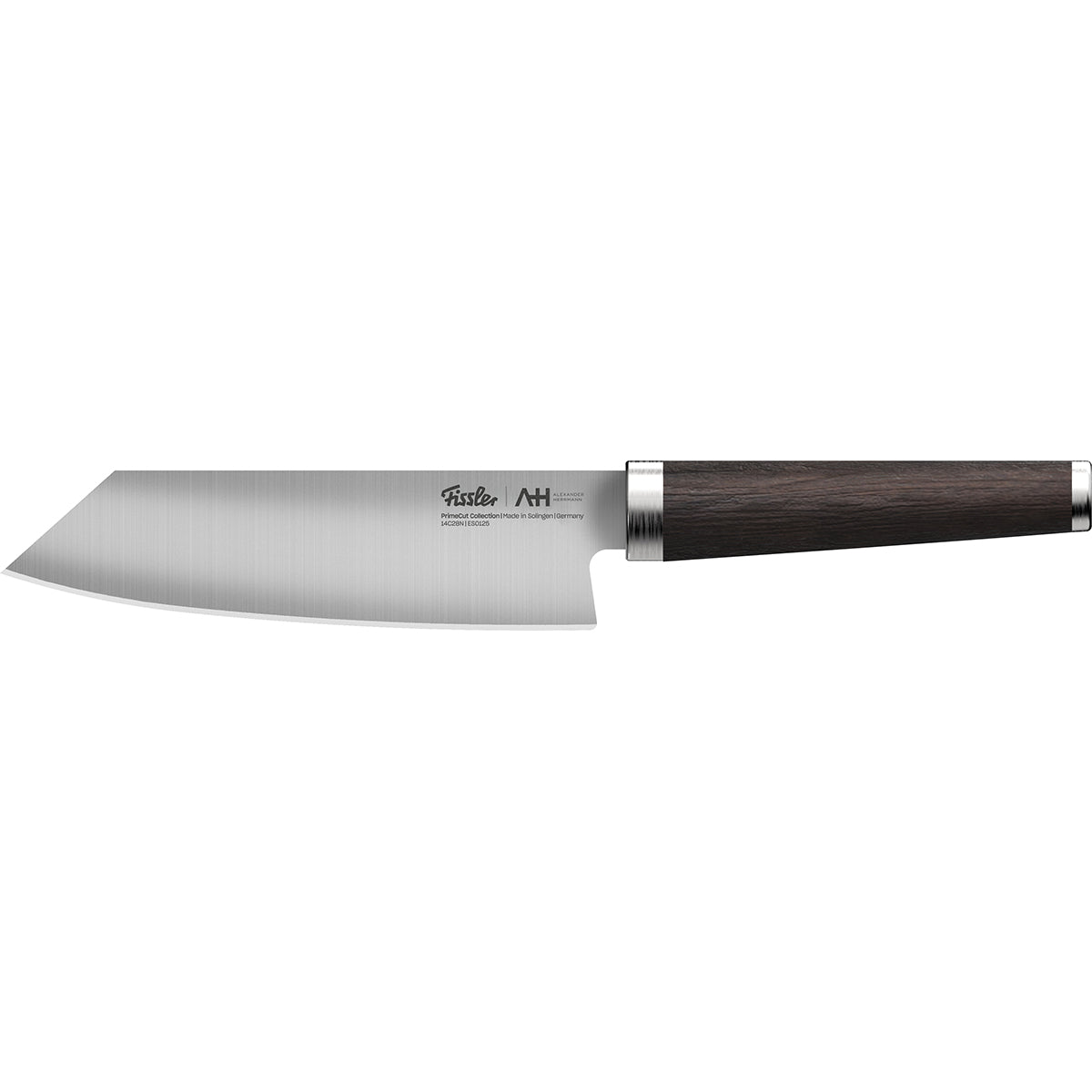
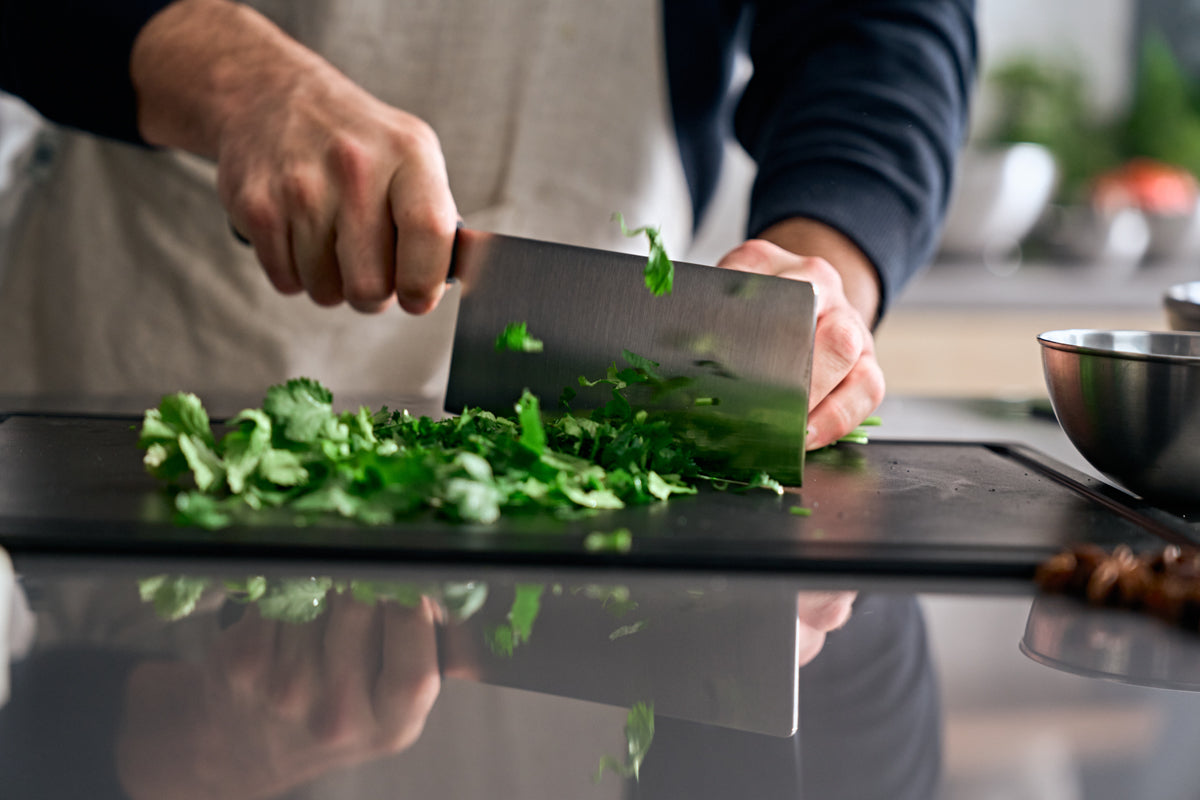
With the right cookware, prep is done in no time. For chopping, it's best to use a large, sharp chef's knife and a non-slip cutting board. That way, you can cut everything safely and cleanly.

Cut the pumpkin in half, remove the seeds and fibers with a tablespoon, and cut the flesh into cubes or wedges as needed.

Peel or not?

  • Do not peel: Hokkaido, spaghetti squash, delicata squash
  • Peel: Butternut, muscat, and peanut squash

Cooking tip: If the skin is particularly tough, you can pre-cook the pumpkin in the oven for about 20 minutes at 150 °C. It will then be much easier to cut.

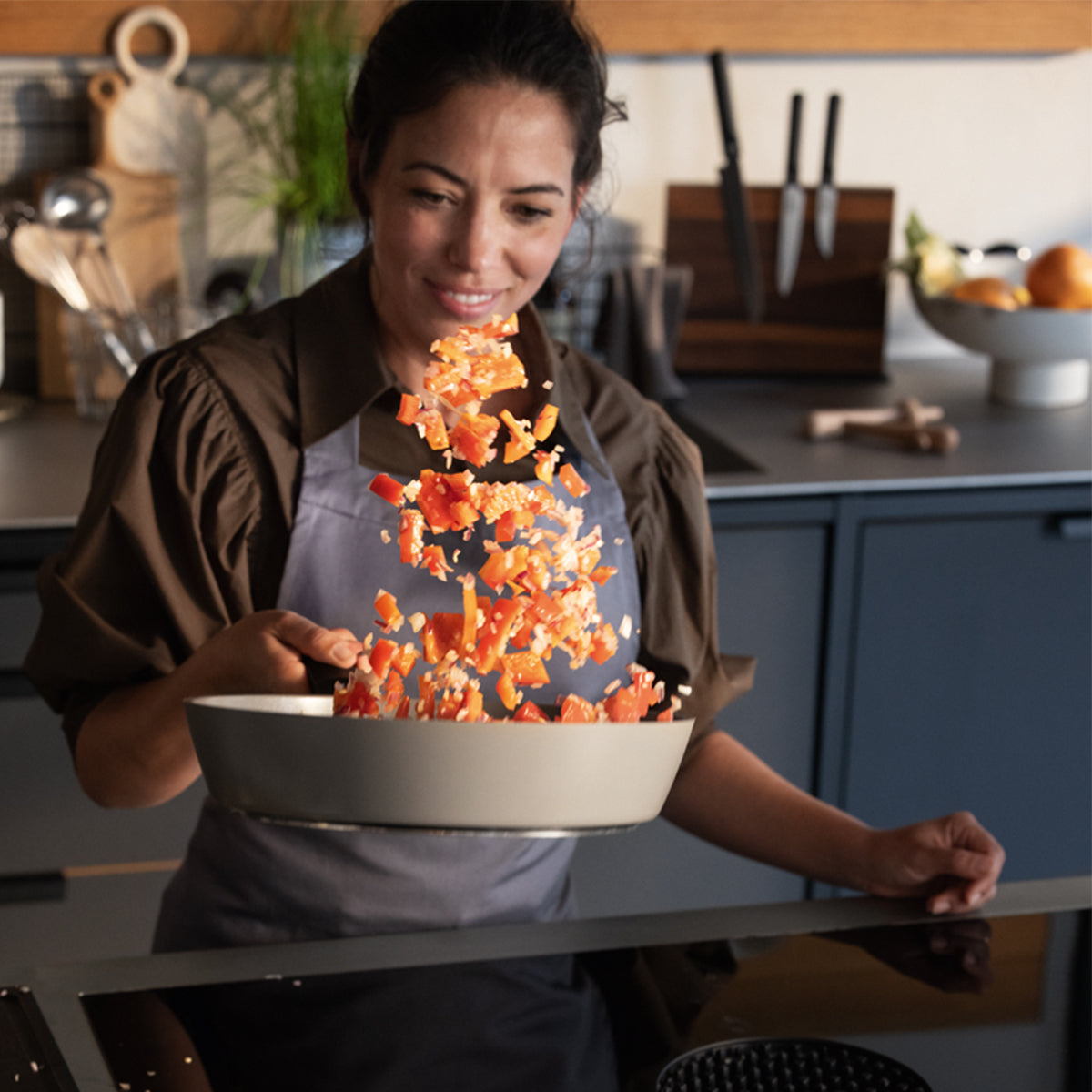
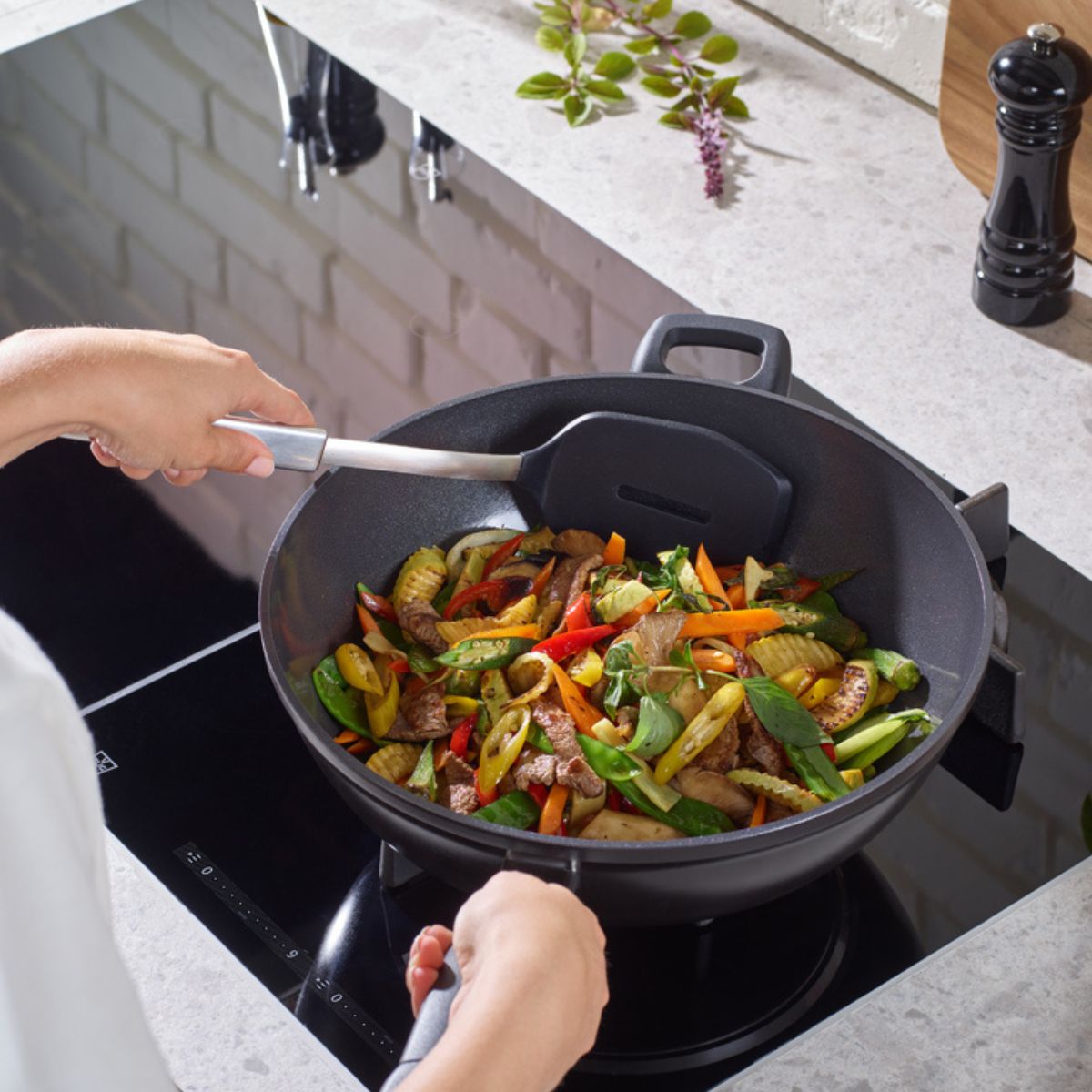
A person prepares sliced pumpkin in a Fissler frying pan on a gas stove, using a precision-engineered spatula. On the premium wooden counter, a durable Fissler stainless steel pot, a glass measuring cup with liquid, and an elegantly designed bottle of oil highlight the timeless quality and German craftsmanship of Fissler cookware.

The most popular preparation methods

Bake in the oven

When pumpkin roasts slowly in the oven, it develops intense roasted aromas and a delicate sweetness.

Toss pumpkin wedges with a little oil and your favorite spices, then bake them at 200 °C top/bottom heat for 20 to 30 minutes.

Cook pumpkin

For soups or purée, cut the pumpkin into cubes and cook in salted water or vegetable broth for about 15 minutes. Once the flesh is soft, it can be puréed easily.

Steam gently

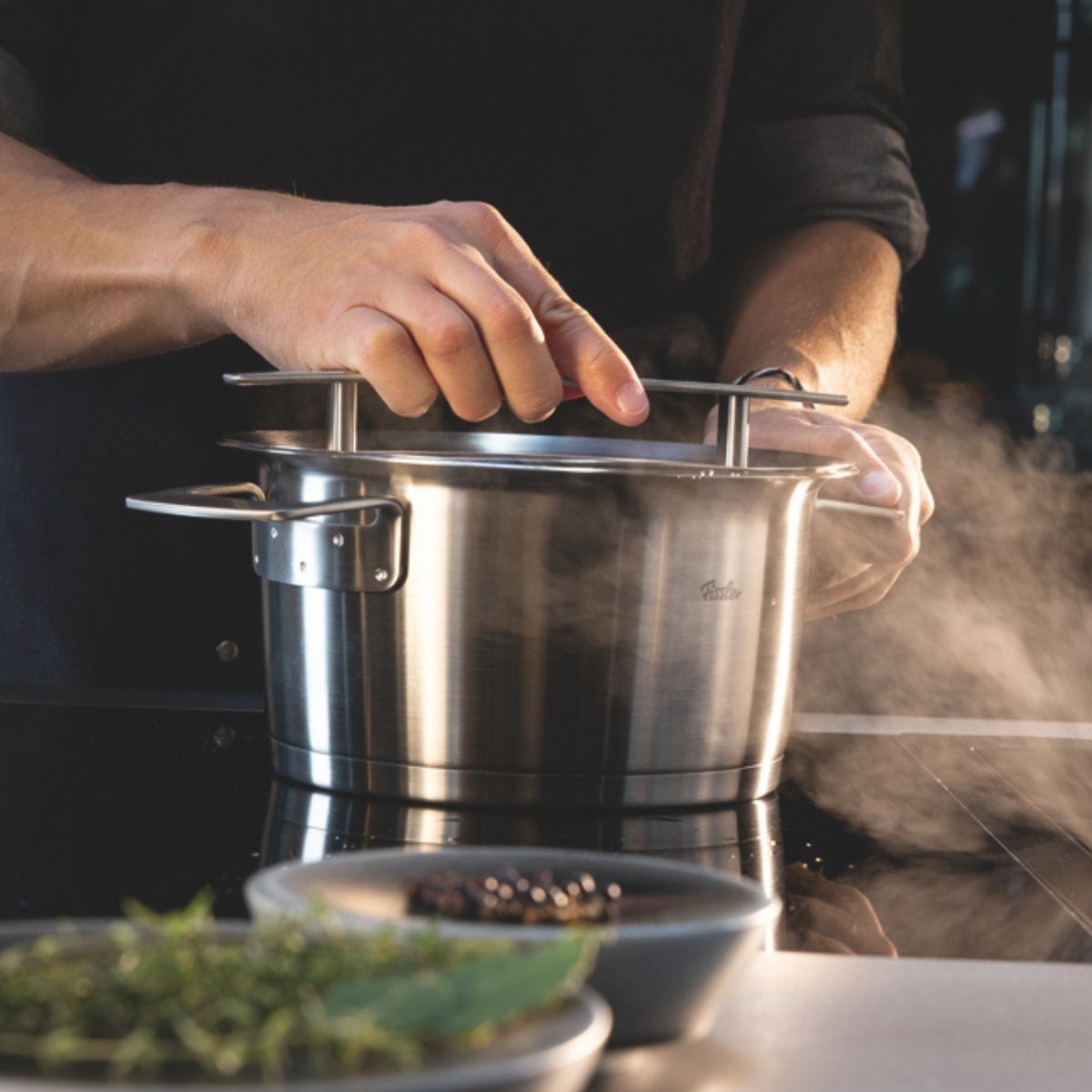
Steaming preserves flavor and nutrients especially well. A simple steamer insert in a saucepan is all you need. The pumpkin becomes even more flavorful if you enhance the water with vegetable stock.

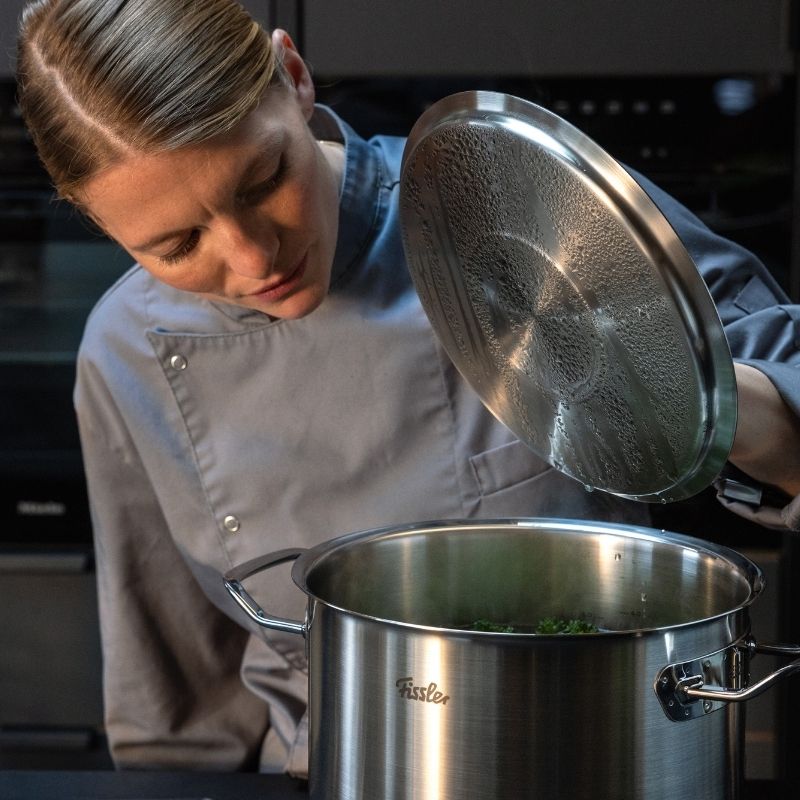
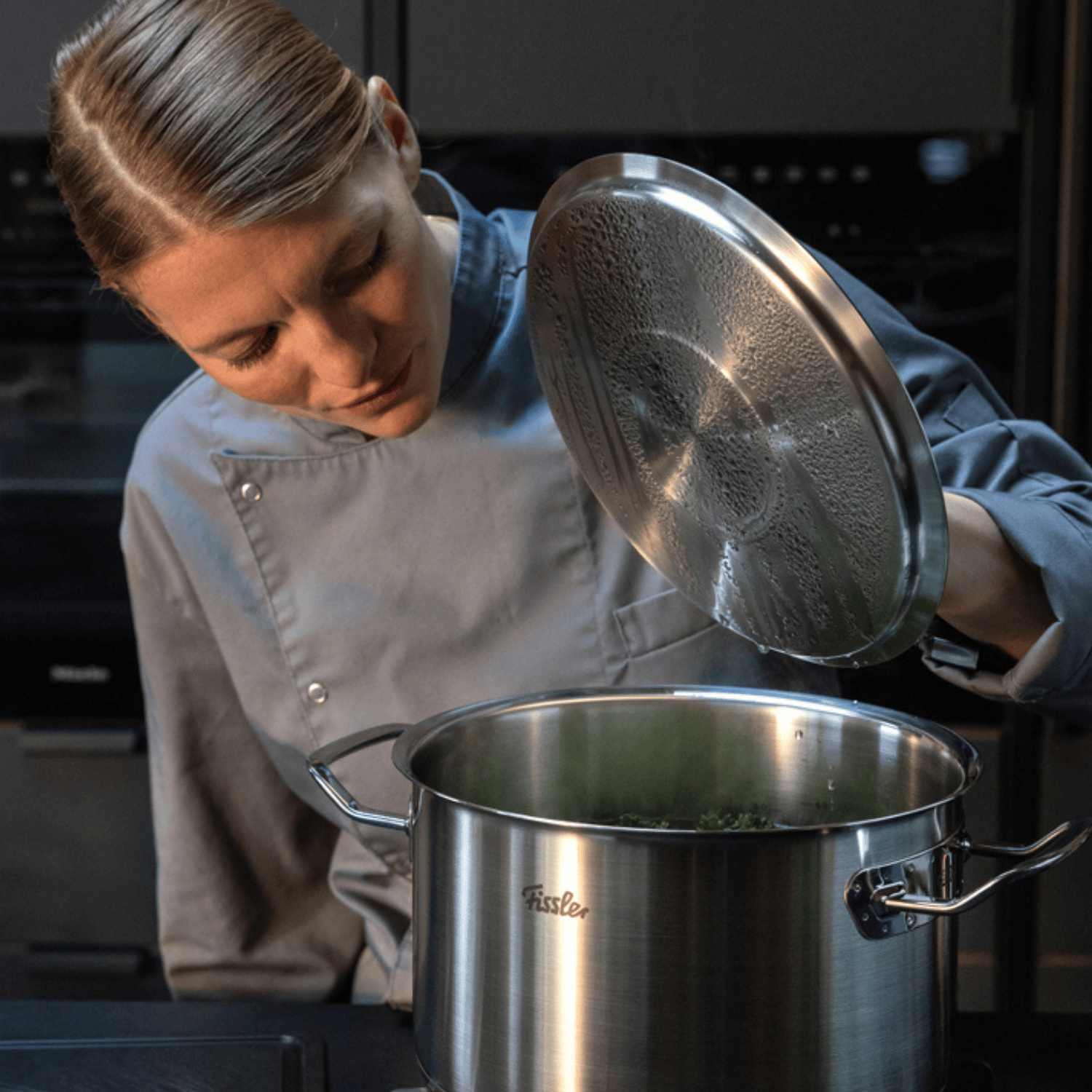
A person wearing an apron stands in a kitchen, holding a spoon and tasting food from a Fissler stainless steel pot on the stove, reflecting thoughtfully on the flavor. The scene highlights precision German engineering and timeless design in cookware.

Pressure Cooking

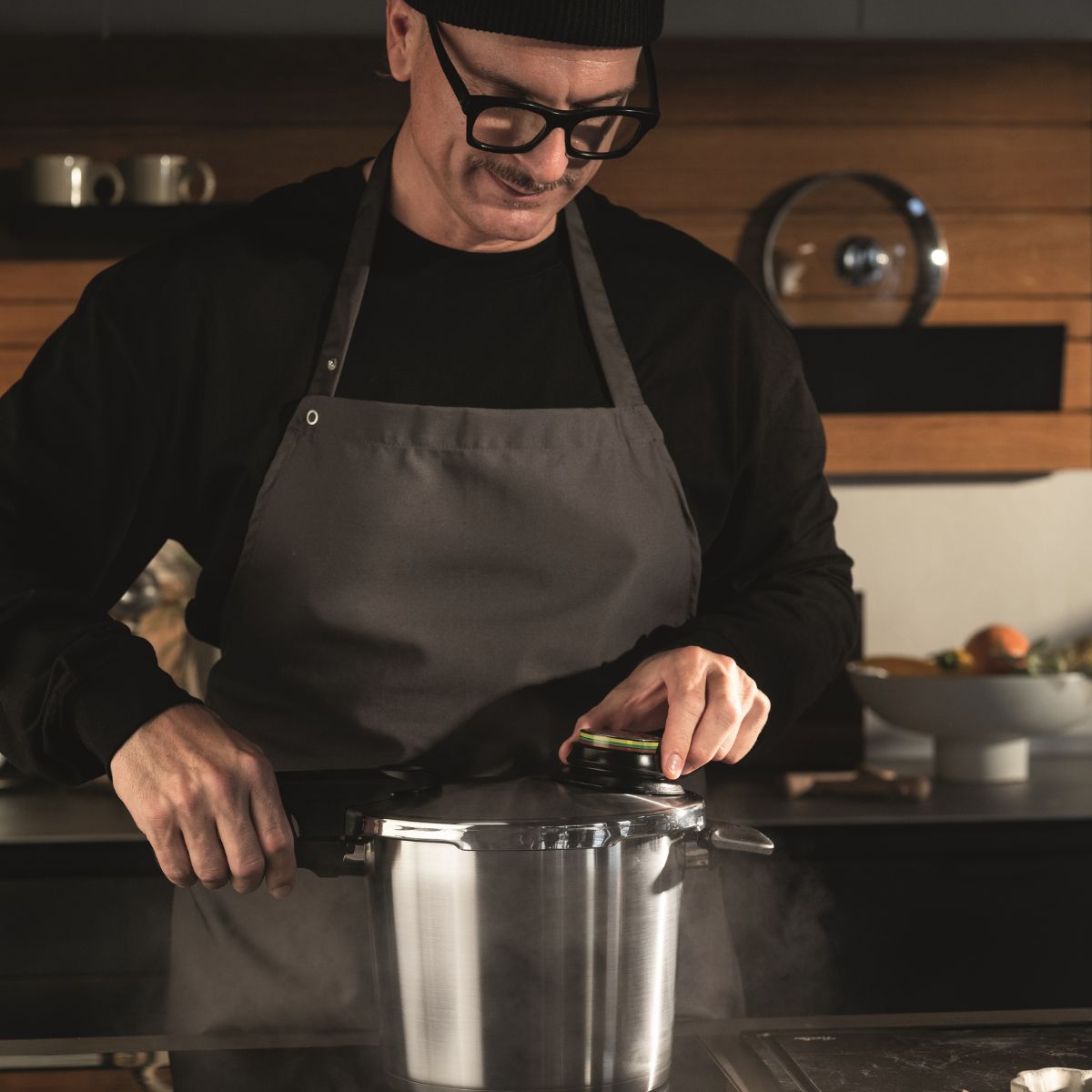
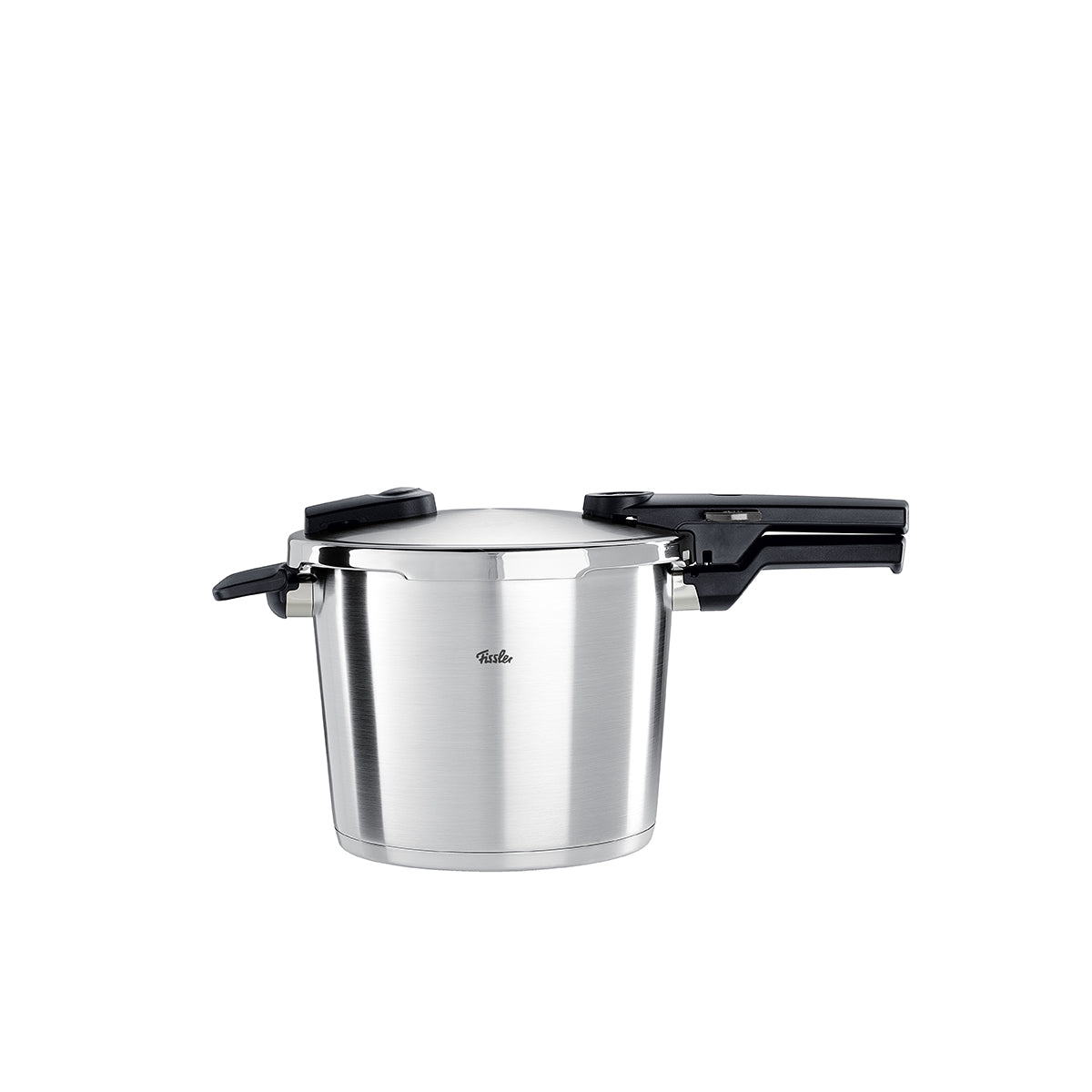
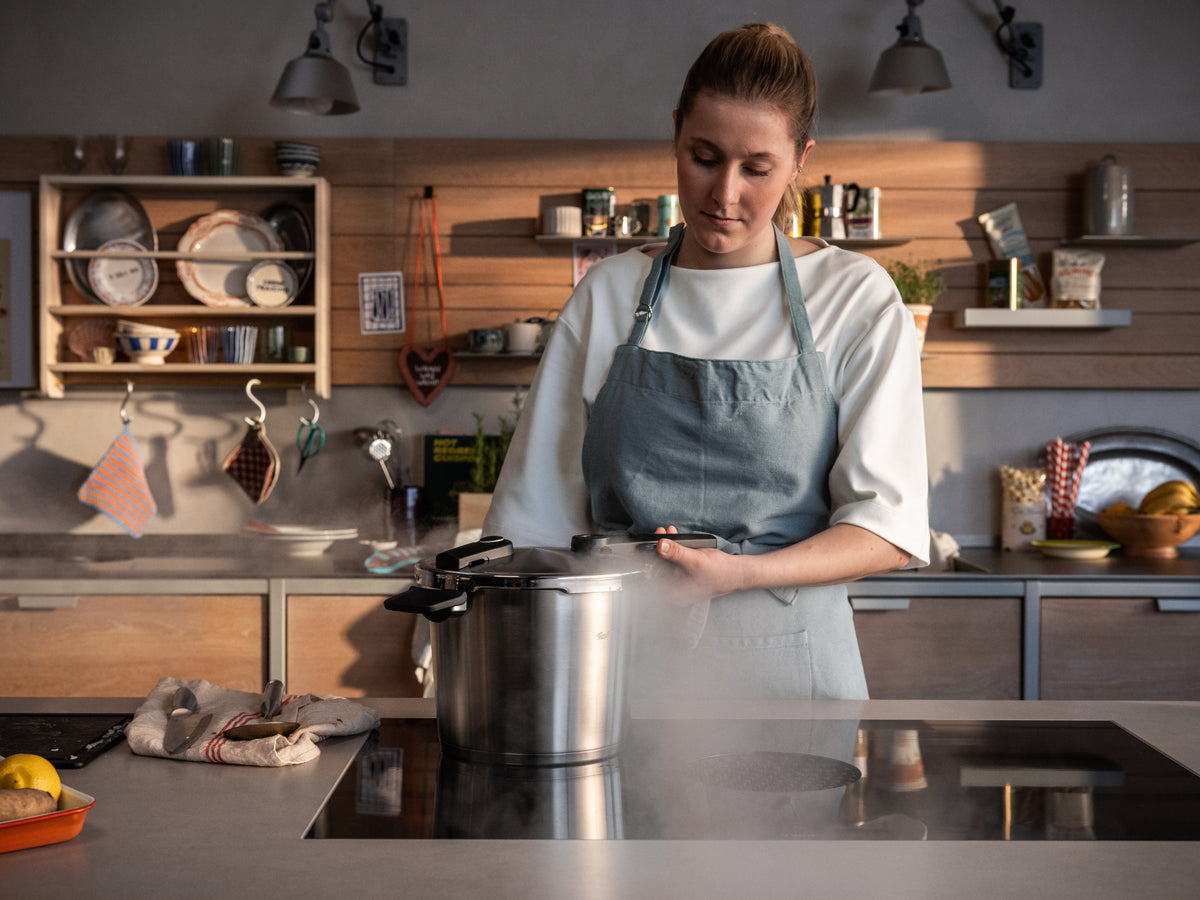
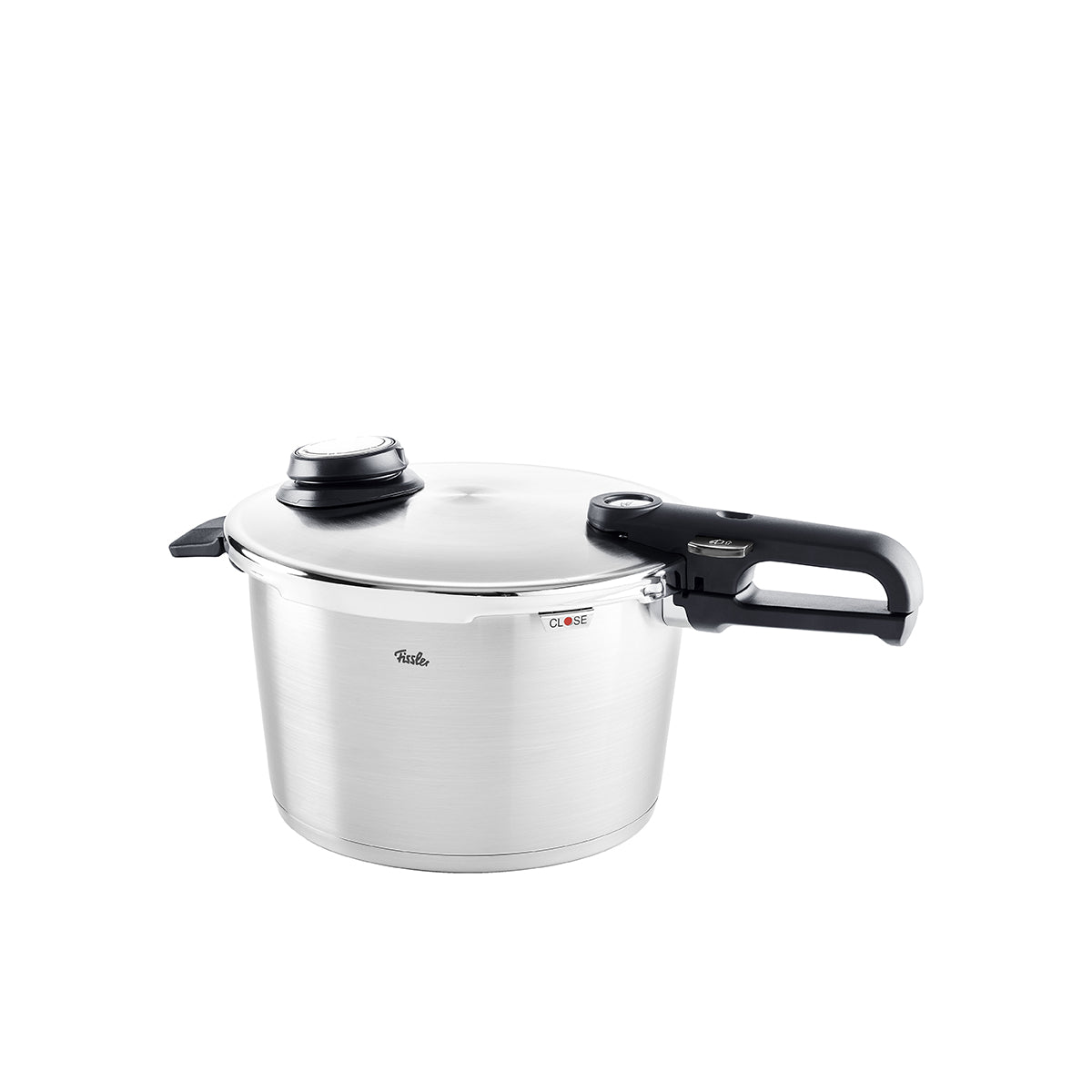
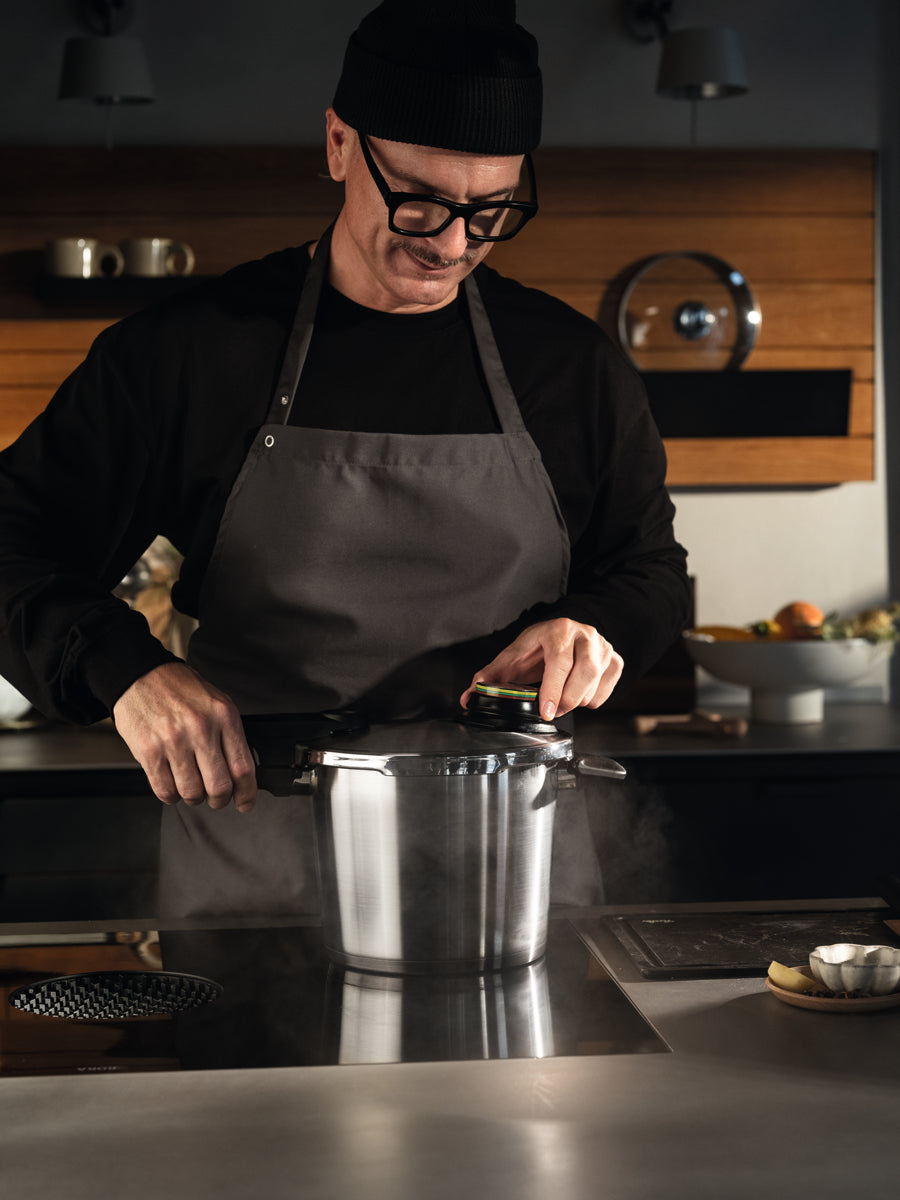
When you need things to be especially quick, a pressure cooker is the perfect choice. The increased pressure significantly reduces cooking time while largely preserving flavor and vitamins.*

A 500 g pumpkin is fully cooked in just 5-7 minutes and is then ideal for soups, puree, or side dishes.

This cooking method saves a lot of time, especially for larger quantities or meal prep.

* Based on cooking tests comparing cooking in a Fissler pressure cooker with cooking in a conventional pot. Results vary depending on the food, quantity, type of stove, and preparation method.

Three people in a kitchen prepare food together, showcasing Fissler’s stainless steel cookware. One person slices sweet potatoes on a wooden counter while another works nearby using Fissler pots and pans, and a third stands at the sink. A variety of fresh vegetables and premium Fissler kitchen accessories are arranged on the countertop, reflecting precision engineering and timeless German design.

How to Store Pumpkin Properly

An intact pumpkin can keep for several weeks under ideal conditions. The key is a cool, dry, and dark place for storage.

For pieces that have already been cut, you should:

  • remove the seeds and fibers
  • cover well or pack airtight
  • store in the vegetable drawer of the refrigerator
  • use within 3 to 5 days

Tip: Freeze pumpkin

Pumpkin also freezes exceptionally well, which can extend its shelf life by several months.

To do this, the pumpkin:

  1. remove the seeds
  2. cut into cubes or wedges,
  3. pack airtight and
  4. freeze for up to 3 months

Hokkaido can even be frozen with the skin on. The frozen pieces can later be placed directly into the pot or oven.